Valorant in 2026 as iiTzTimmy Climbs From Lowest to Highest Rank in One Stream
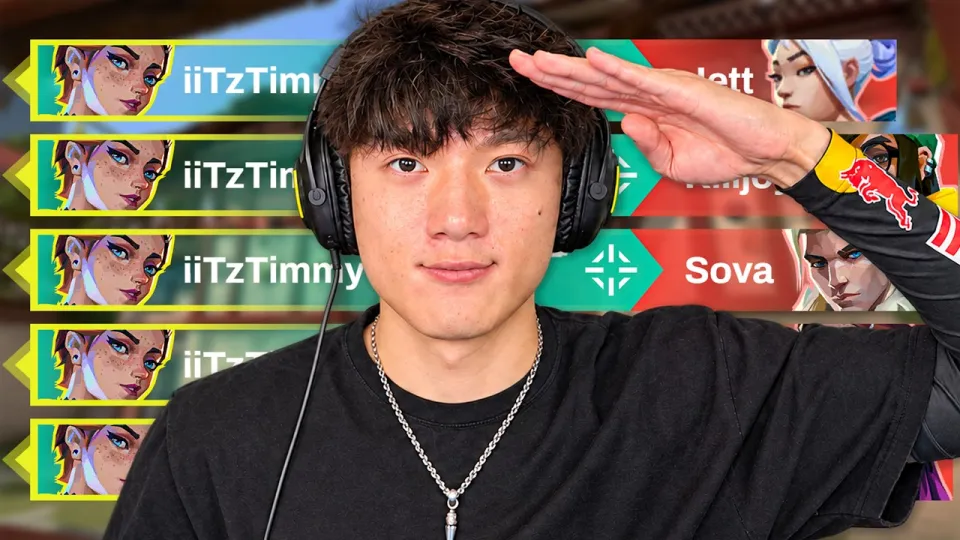
Video: I Might Be Getting TOO Good at Valorant… (Lowest To Highest Rank Challenge)
You can order the same kind of articles for your own video to boost it on YouTube and Google. Just message the Telegram bot @sat_sit_bot. Articles with your video embedded are written and posted by the bot itself — on popular topical sites (no ads). Try it free: 50 articles on us.
· based on the channel iiTzTimmy Two
Key takeaways
- iiTzTimmy runs a lowest-to-highest rank challenge in Valorant, starting from the bottom of the ladder and climbing toward Radiant.
- The run mixes Iron-tier lobbies with high-rank play, so the same player faces wildly different team quality and pace.
- A Cypher in the opening game tilts hard over missing comms while making questionable plays of his own.
- In a later lobby opponents chase the streamer relentlessly once they recognize him, and one even fakes being AFK.
- Viewers flag a possible bug where the ultimate does not refresh after a kill, plus questions about sensitivity and DPI.
Valorant in 2026 rewards players who can convert raw aim into rank points, and iiTzTimmy's lowest-to-highest rank challenge is a clean demonstration of how that works: he starts at the bottom of the ladder and grinds upward toward Radiant, and the whole run is streamed live on Twitch. The format is simple — one account, every rank from the bottom up — but the lessons it exposes about aim, mental and communication apply to anyone stuck in Silver or Gold. The full challenge is documented on the iiTzTimmy Two channel.
What the lowest-to-highest rank challenge actually tests
The challenge isolates one variable: the same player against every skill bracket Valorant can produce. Starting at the bottom means facing opponents who miss easy shots, stack on site without trading and rarely use utility, while the climb eventually puts the same player against Ascendant and Immortal lobbies where every peek is punished.
Three things get tested along the way:
- Aim consistency. Low-rank games let a strong player win duels on reflex alone; higher ranks force crosshair placement and pre-aim instead of raw flicks.
- Adaptation speed. The correct play in Iron — take every fight, push first — becomes a throw in Diamond, where trading and utility usage decide rounds.
- Mental resilience. The lower brackets are loud. Teammates argue, blame and miscommunicate, and staying composed is worth more rank points than another hour of aim training.
For anyone doing their own road to Radiant, the takeaway is that climbing is not one skill. It is a stack of habits that get unlocked bracket by bracket, and the challenge makes that visible in a way a single ranked session never does.
The Cypher who tilted over comms is the real lesson of game one
The opening match of the run produced the most-discussed moment: a Cypher on the team spiraled over missing callouts, blamed teammates for his own deaths and effectively invented comms that were never made. Viewers picked up on it immediately, and the consensus was blunt — that is what a bad mental looks like in Valorant.
What makes the clip instructive is how ordinary the pattern is:
- Blame replaces review. Instead of asking why he was first into site alone, the Cypher audited everyone else's play.
- Tilt compounds. Each lost round made the next callout louder, which made the team less likely to listen.
- The scoreboard lies. A player can post decent numbers while actively lowering the team's win probability through attitude alone.
If you recognize yourself in that behavior, the fix is mechanical rather than emotional: mute the argument, reset the round, and review the death instead of narrating it. A single calm voice in a low-rank lobby is often worth more than a second duelist.
Why low-rank lobbies feel nothing like your Gold games
The gap between brackets is bigger than the rank badge suggests, and the challenge shows it from the inside. In the bottom tiers, rounds are decided by who lands the first clean shot; utility is decorative, and rotations arrive late or not at all. A player with strong mechanics can post lopsided scorelines without doing anything clever.
By the time the climb reaches the middle of the ladder, the game changes shape:
- Trades become standard. If you peek alone, someone is already holding the angle behind your target.
- Utility sets up entries. Smokes and flashes are timed rather than thrown at the start of the round.
- Economy matters. Forced buys get punished, and a lost bonus round swings momentum.
That is why the same player can look unstoppable in one lobby and ordinary in the next. The skill ceiling in Valorant is not aim alone; it is how quickly you notice that the lobby has changed and adjust your aggression accordingly.
Opponents who recognize the streamer and the fake AFK moment
Once a well-known player enters a ranked lobby, the match stops being a normal game. In the later stages of the run, opponents chased the streamer relentlessly, over-peeked for a highlight and treated every duel like a personal vendetta — and one player even faked being AFK to bait a reaction.
That behavior cuts both ways:
- Free information. Players who force fights for content give away their position and timing, which a disciplined opponent can punish round after round.
- Free pressure. The streamer becomes the target of every push, which means his teammates often get cleaner entries and quieter flanks.
The practical lesson for regular ranked players is the same one that applies to any lobby with a smurf or a loud opponent: do not chase the highlight. Play the round, take the free trade, and let the other team's ego do the work.
Sensitivity, DPI and the settings questions viewers keep asking
Every aim-heavy Valorant video produces the same comment thread, and this one is no exception: what sensitivity and DPI does the player use? The honest answer is that copying a professional's number will not fix your aim, because sensitivity is a function of mousepad space, grip style and how much wrist versus arm you use.
A workable process instead of a copied number:
- Pick an eDPI range used by most high-level players and stay inside it for at least a week.
- Test it in Deathmatch, not ranked — you need volume, not consequences.
- Change one variable at a time; if you adjust sensitivity and DPI together, you learn nothing.
- Judge by consistency across ten games, not by one hot match.
Viewers also flagged a possible bug in the run where the ultimate did not appear to refresh after a kill. Whether or not that is reproducible, it is a reminder to check your ability state before an entry rather than assuming the game tracked the reset.
What actually moves you up the ladder
Rank points come from winning rounds, and winning rounds come from small, repeatable decisions. Watching a lowest-to-highest climb makes the pattern obvious: the players who climb fastest are not the ones with the flashiest aim, but the ones who die less often in avoidable ways.
Priorities in order of impact:
- Crosshair placement. Keep the crosshair at head height on the angle you expect, not on the floor.
- Trade discipline. Never enter alone if a teammate is one step behind you.
- Comms hygiene. Short, specific callouts beat long explanations, and silence beats arguing.
- Mental reset. Two lost rounds in a row is a signal to slow the pace, not to force a hero play.
None of this requires Radiant-level mechanics. It requires the willingness to stop repeating the same death, which is exactly what the Cypher in the opening game never did.
Useful links
- Watch the challenge live and catch future runs: https://www.twitch.tv/iiTzTimmy
- Updates and clips: https://twitter.com/iiTzTimmy
- Photos and stream moments: https://www.instagram.com/iiTzTimmy/
- Short clips: https://www.tiktok.com/@iiTzTimmy
- Community and queue talk: https://discord.gg/iitztimmy
Final thoughts on the climb
The lowest-to-highest rank challenge is more than a highlight reel: it is a compressed course in how Valorant lobbies differ from Iron to Radiant and why mental game matters as much as aim. The Cypher meltdown, the opponents hunting the streamer and the settings questions all point to the same conclusion — climbing is a discipline, not a talent. If you want to see the run unfold in real time, follow the action on Twitch. The full breakdown comes courtesy of the iiTzTimmy Two channel.
Source: I Might Be Getting TOO Good at Valorant… (Lowest To Highest Rank Challenge) · Markdown version
Questions & answers
How long does it take to climb from Iron to Radiant in Valorant?
There is no fixed timeline, because it depends on win rate rather than games played. A player winning roughly two out of every three matches moves up several divisions per session, while a 50 percent win rate stalls regardless of individual stats. The lowest-to-highest format compresses the journey into a single streamed run, but a typical player should expect weeks or months, not days.
Is it better to play more ranked games or to review them?
Both matter, but review is what turns volume into rank. Playing ten games without reflection tends to repeat the same mistakes, while reviewing two or three deaths per session quickly exposes patterns like entering alone or holding the wrong angle. The most efficient routine is a short warmup, a block of ranked games, then a brief look at the rounds you lost for reasons you can control.
Why do teammates tilt so easily in low-rank lobbies?
Lower brackets mix players with very different expectations about communication, so a missing callout gets read as sabotage rather than an oversight. Tilt also compounds: one lost round produces an argument, the argument costs the next round, and the cycle feeds itself. Muting the argument and making one clear callout per round usually does more for the team than joining the debate.
Does copying a pro's sensitivity and DPI improve aim?
Not on its own. Sensitivity only works in combination with your mousepad space, grip and how much you move your arm versus your wrist, so a number that suits one player can feel wrong for another. Pick a reasonable eDPI, keep it fixed for at least a week and test it in Deathmatch before judging the results.